About Whale of a Time

Whale of a Time is riding the wave of change, promoting successful stewardship of our planet to create a peaceful, morally just, humane and sustainable culture, while ensuring survival of all species and their natural habitats. Whale of a Time organises creative and fun, inspiring and empowering events on environmental issues to encourage active participation living a sustainable lifestyle inspired by a positive attitude. We engage young and old from all walks of life through the Whale of a Time Community, the Whale of a Time Festival and the Whale of a Time Workshop. Our work has been recognised by many national and community and environmental awards schemes.

Whale of a Time Tweats

Tuesday, 21 February 2012

Whales and dolphins 'should have legal rights'

Campaign for intelligent marine mammals to have right to life, which would protect them from hunters and captivity

Ian Sample
The Guardian, Tuesday 21 February 2012
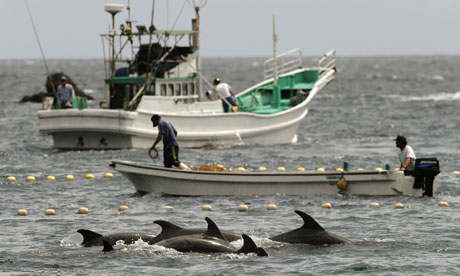

Fishermen drive bottle-nose dolphins into a net during their annual hunt off Taiji, Japan. Photograph: Kyodo News/AP
Campaigners who believe that dolphins and whales should be granted rights on account of their intelligence are to push for the animals to be protected under international law.

A group of scientists and ethicists argues there is sufficient evidence of the marine mammals' intelligence, self-awareness and complex behaviour to enshrine their rights in legislation.

Under the declaration of rights for cetaceans, a term that includes dolphins, whales and porpoises, the animals would be protected as "non-human persons" and have a legally enforceable right to life.

If incorporated into law, the declaration would bring legal force to bear on whale hunters, and marine parks, aquariums and other entertainment venues would be barred from keeping dolphins, whales or porpoises in captivity.

"We're saying the science has shown that individuality, consciousness and self-awareness are no longer unique human properties. That poses all kinds of challenges," said Tom White, director of the Centre for Ethics and Business at Loyola Marymount University in Los Angeles.

"Dolphins are non-human persons. A person needs to be an individual. And if individuals count, then the deliberate killing of individuals of this sort is ethically the equivalent of deliberately killing a human being. The captivity of beings of this sort, particularly in conditions that would not allow for a decent life, is ethically unacceptable, and commercial whaling is ethically unacceptable," White said.

The group spoke at the annual meeting in Vancouver of the American Association for the Advancement of Science, to raise support for the declaration among scientists and the visiting public. The 10-point declaration sets out a framework to protect cetaceans' "life, liberty and wellbeing", including rights to freedom of movement and residence in their natural environment, and protection against "disruption of their cultures".

"The next step is taking the science and advocating for law in different places, from a regional point of view, from a national point of view, and eventually from a multinational and international view," said Chris Butler-Stroud of the Whale and Dolphin Conservation Society.

Decades of research on cetaceans, and dolphins in particular, has revealed that their brains, while markedly different from humans, are large, complex and capable of sophisticated behaviour. Observations of dolphins have shown that they can recognise themselves, use tools and understand symbols and abstract concepts.

In 2001, Lori Marino of Emory University in Atlanta, who is promoting the declaration, tested whether dolphins recognised themselves by drawing temporary marks on different parts of their bodies and watching them check the mark by swimming up to an immersed mirror. "When we did that with two dolphins they passed with flying colours," she said.

Orcas off Patagonia displayed a seemingly extraordinary act when an aged member of the group suffered jaw damage and could no longer eat properly. The whale's companions kept the animal alive by feeding it. "The animal, we would say, was past its sell-by date, an older creature. They must have conceptualised that if it wasn't fed, something would have happened to it, and they were able to work out what was needed to keep it alive," said Butler-Stroud.

At the Institute for Marine Mammal Studies in Mississippi, a dolphin named Kelly outwitted its human keepers and passed on some of its tricks to its offspring. Dolphins at the centre were rewarded with fish if they collected litter from their tanks and carried it in their mouths to the staff but Kelly found a weakness in the scheme. When people dropped paper into her tank, she hid it under a rock on the bottom. When a keeper next approached, she swam down and tore a small piece off, and returned to the surface to claim her reward. She worked out that a small piece of paper earned the same reward as a big piece, and so maximised her meals.

Then one day, Kelly managed to grab a gull that flew into the tank. When she delivered it to her keepers, she got an especially large fish reward. The next time Kelly was fed she hid the fish at the bottom of the pool, and later brought it to the surface to lure more gulls into the pool. The strategy proved so successful that she taught her offspring, who went on to teach others.

Though much of the declaration is intended to bring pressure on whaling nations and venues that keep cetaceans in captivity, the document has major implications for conservation programmes and environmental assessments that impinge on communities of dolphins, whales and other cetaceans.

As an early step, the special rights for cetaceans are being considered by the UN as part of its convention on migratory species, which aims to protect migrating species over their entire ranges.

Enshrining the rights in law could be some time, though. "If we are lucky it could take 10 years," said White. "We are at the stage of climate scientists 20 years ago. This is the first step."

Sunday, 12 February 2012

Man Builds Fairy Tale Home for $4700

--by Heidi Stevenson , Original Story, Jan 28, 2012

Simon Dale is a family man in Wales, the western part of Great Britain. His interest in self-sustainability and an ecological awareness led him to dig out and build his own home—one of the loveliest, warmest, most inviting dwellings you could ever imagine. And it cost him only £3,000, about $4,700 American dollars!

Can you imagine a more charming entrance than this?


Simon gives two reasons for building the home. The first elegant one, from his website, is:
It’s fun. Living your own life, in your own way is rewarding. Following our dreams keeps our souls alive.
His second reason is a plea for sustainability, in which he states that “our supplies are dwindling and our planet is in ecological catastrophe”. You can read the full and passionate statement here.
Simon is also a photographer, and as you can see throughout this article, a talented one.


A beautiful view in another home that Simon is helping build for someone else. (Originally, this was mistakenly identified as a photo of the home he and his family are living in.)
The tools are fairly simple. The main concession to modernity was a chainsaw, which he used to cut down about 30 small trees. No old growth forest fell to his family’s needs. He focused on tools that used his own energy, like shovel, chisel, and hammer. Yet it took him only four months to produce this lovely home.


The home is constructed from wood, stone, straw, and has a sod roof. It’s heated with a wood fireplace and has a solar panel for power. Most materials were scavenged. The effect, though, isn’t of a run-down get-by-with-second-best sort. It’s creative, artistic, elegant, and cozy.Most amazingly, the home didn’t require years of training or experience. Simon had none. He’s not an architect. He’s not an engineer. He’s not a carpenter. He started from scratch in every sense. He told the Daily Mail:
Being your own have-a-go architect is a lot of fun and allows you to create and enjoy something which is part of yourself and the land rather than, at worst, a mass-produced box designed for maximum profit and the convenience of the construction industry.
Building from natural materials does away with producers’ profits and the cocktail of carcinogenic poisons that fill most modern buildings.


He was fortunate in obtaining the land for his home. The plot, a bit of a large piece, was given to him in exchange for its caretaking.


Simon Dale, his wife Jasmine Saville, and their two children in front of their completed home just 4 months after starting it! This and all photos on this page are by Simon Dale (http://simondale.net).
The attention to making the home eco-friendly extends to a compost toilet, the use of straw over a plastic layer for insulation, and a refrigerator that’s cooled with air that flows from under the home’s foundation. Cement is a high carbon emitter, so the interior walls are finished with lime plaster instead of cement plaster.


Simon is now involved in building another home for the Lammas Project, an organization dedicted to low-impact building. Focus is not only on the homes themselves, but also on planting trees and gardens, and on low impact living in general. Here’s how he sums up his view on his home and the Lammas Project:
This building is one part of a low-impact or permaculture approach to life. This sort of life is about living in harmony with both the natural world and ourselves, doing things simply and using appropriate levels of technology. These sort of low cost, natural buildings have a place not only in their own sustainability, but also in their potential to provide affordable housing which allows people access to land and the opportunity to lead more simple, sustainable lives.
I cannot imagine a home more lovely, appealing, and livable than this one. This could be and should be the wave of the future in home building.
For more information about Simon Dale’s home, plans, and more photos, please go to his website, A Low Impact Woodland Home.

Occupy for Nature's Right

Occupy for Nature’s Right
By Irene Schleining
Whale of a Time
Irene@whaleofatime.org

“Sach’amama, Dreams of Transformation” by Cyberstarlet

The birth of the Occupy movement stirs sleepy nations
Crying out for environmental, social and economic liberations
While the G20 summit is in the red zone to resolve the Eurozone -
Greece, Italy and Spain are zoned out in deprivation
While governments search for a deficit cure
Budgets are cut for society’s poor
While climate change in Durban struggles to find an ear
Farmers are struggling to keep crops alive amid droughts in fear
While the Occupy Movement is expanding to all lands
People are joining in global conversation to take matters in their own hands.

With the Occupy Agenda seeking referenda with some extra time
Ideas issued in the “Bank of Ideas” are paving the way for a new paradigm
The campaign against the injustices of the global financial system calls for “an end to tax havens and tax avoidance”
The small tax payer is looking for condolence
“More transparency over business lobbying”, no more space for bargaining!
Clear calls to prosecute executives, a legal reform, that should be the norm
Our fundamental message is that we are all affected. We’re all connected - Entangled in the web of life
Stand up for justice in our fight!
Occupy for Nature’s Right!

Corporate Executives are having a laugh, but enough is enough!
As we all know from Annie Leonard’s “Story of Stuff”
Corporations need limitations, to avoid people’s and nature’s deprivations
Democracy has been kidnapped by global corporations, with insufficient regulations
Banks without social nor environmental responsibility, exploitation without taxation nor liability.

It’s the “End Of The Line” in 2009, with fish stock decline
Whales and dolphins captured for Sea World tortures
Nature’s intelligence - massacred in Taiji by ignorance
Rainforests – the green lungs of the planet, more than half already vanished -
Traded for oil, soya and paper in vain
It’s irreversible and only for short-term gain
Billions of years of evolution lost!
Half of the world’s biodiversity at super low cost!
Environmental regulations needed for future generations
Climate protocols aren’t binding, while world temperatures are rising
And the icing? Our polar bears are dying!
If you think the situation isn’t dire
Think about “The Revenge of Gaia!”

We need a new system recognising ecological and moral worth
So support the Universal Declaration of the Rights of Mother Earth!
We know that when we disrespect and harm nature
We diminish ourselves and impoverish our future
No business interests come first, and nature, communities and ecosystems will be reimbursed
Bolivia and Ecuador are in the lead, they saw the threats and urgent needs
Ecuador rewrote its Constitution, the people of Ecuador found the best solution
Ratified by people’s referendum, this is where democracy comes from.

Treating nature as property is daylight robbery
“Mother Earth is a living being”, we’re part of her indivisible breathing
“All life forms have the right to exist”, that’s what the Declaration insists
Intrinsically interlinked complex ecosystems, we need them for resilience and our future existence
“For nature to persist, maintain and regenerate”, people need to congregate
If we can enforce Mother Earth’s Right, then maybe after all - there is some light.
Stand up and fight! Occupy for Nature’s Right!

We recognise that Genocide is a crime against peace
So why not recognise the crime of Ecocide and kill that beast
“A human right to life and dignity is meaningless without water and wilderness”
We are part of Nature and Nature is part of us
A self-regulating community should live in unity
Let’s redefine our human relationship with Mother Earth
Just in time for 2012 for planetary rebirth
Remember, what your life means to you
And give back that love to our Earth Mother too
Imagine a world with peace and no crime
We could all be having a whale of a time!
Stand up and fight! Occupy for Nature’s Right!

The obvious truth of the Rights of Nature, is implicit in the Occupy Agenda
This message is transparent and this message is clear, that’s why we are here
Nature needs a voice in our democracy, the 99% includes nature too, and you and me
We can’t cure the symptom of bankruptcies, by bailing-out banks that created these
And paying with endangered species, leaving a planet devastated in pieces
The cause of much destruction and war is a psychotic disease, created by money and greed.

Let’s reset our democratic system, play a new melody with a different rhythm
With laws in force that are 100% for people and nature
For a peaceful foundation to thrive in healthy nations and for all future generations
Stand up and fight! Occupy for Nature’s Right!

Read the complete Declaration of the Rights of Mother Earth at
www.rightsofmotherearth.com

If you agree that Nature has rights, like the right to exist, then please encourage the UN and heads of state to accept the Declaration by signing this petition at http://www.thepetitionsite.com/1/yes-to-rights-of-nature

Poem written by Irene Schleining, Whale of a Time - www.whaleofatime.org

With thanks to Melanie Strickland (Wild Law UK) for her valuable feedback.

Wednesday, 8 February 2012

Shipping causes 'chronic stress' to whales

First evidence of physical harm of propeller noise on the animals

Damian Carrington
The Guardian, Wednesday 8 February 2012
Article history


New evidence shows for the first time the harmful effect of shipping noises on whales. Photograph: Barrett & MacKay/Corbis

Shipping noise causes chronic stress to whales, scientists have shown for the first time, after using the halt in marine traffic after the 9/11 terrorist attacks to conduct a unique experiment.

The effect on whales of propeller noise, military sonar and explosions set off in the search for oil and gas is highly controversial. Environmental campaigners claim the noise interferes with the singing of whales, or even kills the animals, and are currently suing the US government over the navy's use of sonar.

The research, published on Wednesday, provides the first evidence of physical harm, according to Rosalind Rolland, a researcher at the New England Aquarium, in Boston, US.

"We showed whales occupying oceans with high levels of ship noise have a chronic stress response," said Rolland, who led the study. "We knew whales changed the frequency of their calls to adapt to the ship noise, but this work shows it is not merely an annoyance – it is having a physical effect."

She had not originally set out to study the effect of noise on the animals. The hormone data was part of a study of the whales' health and reproduction but Rolland realised many years later it could be combined with data on noise levels from shipping to draw conclusions about how the whales are being affected.

Whales use sound as their primary sense, just as humans use sight, and their singing enables them to find food, mates and to navigate. They are believed to be able to communicate over hundreds of kilometres. But the frequencies they use largely overlap with the frequencies generated by human activities in the oceans, which have increased tenfold in volume since the 1960s, disrupting their ability to communicate.

A separate study published in January showed the singing of humpback whales was disrupted by sonar noise caused over 200km away while measuring fish stocks.

Rolland was at sea in the Bay of Fundy on 11 September 2001: "There was a dramatic reduction in ship traffic that day. It was like being on the primal ocean." The noise levels from shipping fell by half, as transport was shut down in response the terror attacks. Rolland's team also collected faecal balls from the whales, which float, and analysed the levels of stress hormones present. They found a "highly significant" decrease in stress hormones coincided with the drop in shipping noise.

"Instant responses to stress – like running away from a tiger – can be life-saving," said Rolland. "But if it becomes chronic, it causes profound depression of the immune system, making them vulnerable to disease, and it depresses reproduction."

The northern right whales Rolland studied are one of the most endangered whales, with 475 in the world and a population growing at just 1% a year. In contrast, the southern right whale numbers 8-10,000 and a growth rate of 7-8% a year, as they recover from the decimation of whaling. Rolland dubbed the northern right whale "the urban whale" in a book she co-authored, because its territory is close to the busy eastern seaboard of North America. She said damage caused by noise is very likely to be a factor in the population's slow recovery, and may also affect other whales. Beaked whales, which Rolland is now studying, are particularly sensitive to sonar she said, and are frequently the species involved in mass beachings.

"The positive aspect to this particular issue is that it is a solvable problem," Rolland said. The noise is largely down to engine inefficiencies, she said, which is possible to remedy and doing so would reduce fuel consumption in return for upfront investment. The International Maritime Organisation and the European Union are both investigating how to reduce marine noise. But with 50,000 large ships travelling the oceans on any given day and a ship lifespan of about three decades, changing the fleet will not occur overnight.

Danny Groves, at the Whale and Dolphin Conservation Society, said: "Not enough is being done to reduce noise in our oceans Very little is known about its long-term effects and more research is needed.

"Amazingly, there are currently no accepted international standards regarding noise pollution in our seas."

Asked how the whale faecal balls were found, Rolland said: "We find the pellets opportunistically, but we do also use trained scent-detection dogs. They are phenomenal. They work off the bow and can detect the scent up to 1km away."

Navy Training Blasts Marine Mammals with Harmful Sonar

Wildlife protection agency challenged for not doing its job
January 26, 2012

Southern Resident orcas (Kelly Balcomb-Bartok)
Fact Sheet: "West Coast Marine Life and the Navy's NW Training Range"
Video: Orcas and Navy Sonar

San Francisco, CA — A coalition of conservation and American Indian groups today sued the National Marine Fisheries Service (NMFS) for failing to protect thousands of whales, dolphins, porpoises, seals, and sea lions from U.S. Navy warfare training exercises along the coasts of California, Oregon, and Washington.
Southern Resident orcas. (Kelly Balcomb-Bartok)
Fact sheet: "West Coast Marine Life and
the Navy’s NW Training Range"
Video: Orcas and Navy Sonar
Earthjustice, representing InterTribal Sinkyone Wilderness Council, Center for Biological Diversity, Friends of the Earth, Friends of the San Juans, Natural Resources Defense Council (NRDC), and People For Puget Sound, today filed a lawsuit in U.S. District Court for the District of Northern California challenging NMFS’s approval of the Navy’s training activities in its Northwest Training Range Complex. The lawsuit calls on NMFS to mitigate anticipated harm to marine mammals and biologically critical areas within the training range that stretches from Northern California to the Canadian border.
“These training exercises will harm dozens of protected species of marine mammals—Southern Resident killer whales, blue whales, humpback whales, dolphins, and porpoises—through the use of high-intensity mid-frequency sonar,” said Steve Mashuda, an Earthjustice attorney representing the groups. “The Fisheries Service fell down on the job and failed to require the Navy to take reasonable and effective actions to protect them.”
The Navy uses a vast area of the West Coast for training activities including anti-submarine warfare exercises involving tracking aircraft and sonar; surface-to-air gunnery and missile exercises; air-to-surface bombing exercises; sink exercises; and extensive testing for several new weapons systems.
“Since the beginning of time, the Sinkyone Council’s member Tribes have gathered, harvested and fished for traditional cultural marine resources in this area, and they continue to carry out these subsistence ways of life, and their ceremonial activities along this Tribal ancestral coastline. Our traditional cultural lifeways, and our relatives such as the whales and many other species, will be negatively and permanently impacted by the Navy’s activities,” said Priscilla Hunter, chairwoman and co-founder of the InterTribal Sinkyone Wilderness Council. “Both NMFS and the Navy have failed in their obligations to conduct government-to-government consultation with the Sinkyone Council and its member Tribes regarding project impacts.”
In late 2010, NMFS gave the Navy a permit for five years of expanded naval activity that will harm or “take” marine mammals and other sealife. The permit allows the Navy to conduct increased training exercises that can harm marine mammals and disrupt their migration, nursing, breeding, or feeding, primarily as a result of harassment through exposure to the use of sonar.
“The Navy’s Northwest Training Range is the size of the State of California, yet not one square inch is off-limits to the most harmful aspects of naval testing and training activities,” said Zak Smith, staff attorney for NRDC. “We are asking for common-sense measures to protect the critical wildlife that lives within the training range from exposure to life-threatening effects of sonar. Biologically rich areas like the Olympic Coast National Marine Sanctuary should be protected.”
The Navy’s mid-frequency sonar has been implicated in mass strandings of marine mammals in, among other places, the Bahamas, Greece, the Canary Islands, and Spain. In 2004, during war games near Hawai’i, the Navy’s sonar was implicated in a mass beaching of up to 200 melon-headed whales in Hanalei Bay. In 2003, the USS Shoup,operating in Washington’s Haro Strait, exposed a group of endangered Southern Resident killer whales to mid-frequency sonar, causing the animals to stop feeding and attempt to flee the sound.
“In 2003, NMFS learned firsthand the harmful impacts of Navy sonar in Washington waters when active sonar blasts distressed members of J pod, one of our resident pods of endangered orcas,” said Kyle Loring, Staff Attorney for Friends of the San Juans. “Given this history, it is particularly distressing that NMFS approved the Navy’s use of deafening noises in areas where whales and dolphins use their acute hearing to feed, navigate, and raise their young, even in designated sanctuaries and marine reserves.”
“Whales and other marine mammals don’t stand a chance against the Navy,” said Miyoko Sakashita, Oceans Director at the Center for Biological Diversity.
The Navy’s mitigation plan for sonar use relies primarily on visual detection of whales or other marine mammals by so-called “ watch-standers” with binoculars on the decks of ships. If mammals are seen in the vicinity of an exercise, the Navy is to cease sonar use.
“Visual detection can miss anywhere from 25–95% of the marine mammals in an area,” said Heather Trim, Director of Policy for People For Puget Sound. “It’s particularly unreliable in rough seas or in bad weather. We learn more every day about where whales and other mammals are most likely to be found—we want NMFS to put that knowledge to use to ensure that the Navy’s training avoids those areas when marine mammals are most likely there.”
The litigation is not intended to halt the Navy’s exercises, but asks the Court to require NMFS to reassess the permits using the latest science and to order the Navy to stay out of biologically critical areas at least at certain times of the year.
Marcie Keever of Friends of the Earth noted, “It has become increasingly clear from recent research that the endangered Southern Resident killer whale community uses coastal waters within the Navy’s training range to find salmon during the fall and winter months. NMFS has failed in its duty to assure that the Navy is not pushing the whales closer to extinction.”

Related Documents:
Read the complaint.
Read the fact sheet: "West Coast Marine Life and the Navy’s NW Training Range"
Watch B-Roll and narrated video of orcas and Navy sonar.

Related Video:
In May 2003, a group of about 20 killer whales and dozens of porpoises were forced to flee the waters near the San Juan Islands in Washington State after a Navy ship passed by with its active sonar blasting. The incident was captured by whale researchers from the Center for Whale Research on San Juan Island. Ken Balcomb, executive director of the Center for Whale Research, narrates this video. (Read related press release and NMFS's report on this incident. B-Roll footage is available for use by reporters and editors.)


Contact:
Steve Mashuda, Earthjustice, (206) 343-7340, ext. 1027
Miyoko Sakashita, Center for Biological Diversity, (415) 632-5308
Hawk Rosales, InterTribal Sinkyone Wilderness Council, (707) 489-3640
Marcie Keever, Friends of the Earth, (415) 544-0790, ext. 223
Kyle Loring, Friends of the San Juans, (360) 378-2319
Jessica Lass, NRDC, (310) 434-2300
Heather Trim, People For Puget Sound, (206) 351-2898

Industry figures confirm GM food is a commercial flop in Europe

GM crops still largely restricted to the Americas

*Brussels, 7 February 2012 ˆ *Annual industry figures to be released on
Tuesday are expected to confirm the commercial failure of genetically
modified (GM) food in Europe, said Greenpeace. Only around 0.06% of the
EU‚s agricultural land was used in 2011 to grow GM food, the report by the
International Service for the Acquisition of Agri-biotech Applications
(ISAAA), a group funded by the biotech industry to promote GM crops, is
expected to say.

Total used agricultural land in the EU amounts to around 179 million
hectares. The biotech industry figure for overall cultivation of GM food in
Europe in 2011 is expected to be just over 110,000 hectares [1].

Widespread public opposition and environmental concerns expressed by
several European governments, scientists and farmers have made GM food a
commercial flop in Europe, said Greenpeace [2]. Only Spain saw a noticeable
rise in cultivation in 2012, slightly increasing overall figures for Europe
after three consecutive years of decline [3].

The publication of the annual ISAAA industry report follows an announcement
in January by BASF, the world‚s biggest chemical company, that it was
abandoning plans to develop and commercialise GM food in Europe due to
opposition from „the majority of consumers, farmers and politicians‰ [4].
Cultivation of BASF‚s flagship antibiotic-resistant potato, known as
Amflora, has been negligible since its controversial authorisation in March
2010, under 20 hectares in 2011 [5].

The only crop that will still be grown in Europe in 2012, Monsanto‚s
pesticide-producing GM maize MON810, is still banned in seven EU countries
because of environmental and health concerns [6]. In January, Monsanto
announced that it would no longer seek to sell its GM maize in France,
saying that „favorable conditions for the sale of the MON810 in France in
2012 and beyond are not in place‰ [7].

*Greenpeace EU agriculture policy director Marco Contiero said: **„There is
no escaping the hard facts: GM food has flopped in Europe, is increasingly
opposed in Asia and is retreating to the Americas. Public rejection and
market failure have already forced BASF to scaling back in Europe, while
Monsanto is holding on by its fingernails. Crops that are only grown on
0.06% of Europe‚s agricultural land can only be described as a failure.‰*

After 16 years of aggressive commercialisation, over 80% of global GM crop
production is still restricted to only four countries in the Americas: the
United States, Canada, Brazil, and Argentina. Recent attempts to introduce
GM food to China (GM rice) and India (GM aubergine) have failed [8].

*Ends

Notes to editors:*
[1] See: http://ec.europa.eu/agriculture/agrista/2010/table_en/C5-2-3522.pdf.
In comparison, the organically farmed area in the EU is almost 7.8 million
hectares (see:
http://epp.eurostat.ec.europa.eu/statistics_explained/index.php/Organic_farming_statistics
).
[2] 61% of Europeans reject GM crops, according to EU polls (Special
Eurobarometer 341 - 73.1 on Biotechnology:
http://ec.europa.eu/public_opinion/archives/ebs/ebs_341_en.pdf).
[3] In 2010-2009, cultivation of GM crops in Europe declined by 13%. In
2009-2008, the ISAAA also reported a 12% EU-wide decline (see: ISAAA,
global status of commercialized biotech/GM Crops: 2009. By Clive James,
ISAAA brief 4, pp. 181-182).
[4] BASF press release: www.basf.com/group/pressrelease/P-12-109.
[5] See: http://www.foodprocessing-technology.com/news/news109205.html.
[6] Countries with a ban on MON810 are: Germany, France, Austria, Hungary,
Greece, Luxembourg and Bulgaria.
[7] See:
http://www.reuters.com/article/2012/01/24/us-gmo-france-monsanto-idUSTRE80N1NI20120124
.
[8] See:
http://www.greenpeace.org/international/en/news/features/China-says-no-to-genetically-engineered-rice/and
http://www.greenpeace.org/international/en/news/features/monsanto-GE-brinjal100210/

Wednesday, 1 February 2012

Survival of the Beautiful by David Rothenberg


Survival of the Beautiful: Art, Science, and Evolution

David Rothenberg, Bloomsbury UK, 2012

A brilliant investigation of why nature is beautiful and how art has influenced science.

Taking inspiration from Charles Darwin’'s observations that animals have a natural aesthetic sense, philosopher and musician David Rothenberg dives into the mysteries of why we create art, and why animals, humans included, have innate appreciation for beauty.

The book will be launched in the UK at the GV Art London on Feb. 15th, 6pm, a venue specializing in art/science exhibitions. All are welcome.

49 Chiltern Street
London W1U 6LY
+44 208 408 9800


Why did the peacock’s tail so trouble Charles Darwin? Natural selection could not explain it, so he had to contrive a whole new theory of sexual selection, which posited that certain astonishingly beautiful traits became preferred even when not exactly useful, simply because they appealed to the opposite sex, and specifically so in each case. And yet the parallels in what gets preferred at different levels of life suggest that nature may in fact favor certain kinds of patterns over others. Visually, the symmetrical; colorwise, the contrasting and gaudy; displaywise, the gallant and extreme. Soundwise, the strong contrast between low note and high, between fast rhythm and the long clear tone. For that matter, plenty of beauty in nature would seem to arise for reasons other than mere sexual selection: for example, the mysterious inscriptions on the backs of seashells, or the compounding geometric symmetries of microscopic diatoms, or the live patterns pulsating across the bodies of octopus and squid.

Humans see such things and find them astonishingly beautiful: are we wrong to experience Nature in such terms? Far greater than our grandest edifices and epic tales, Nature itself nevertheless seems entirely without purposeful self-consciousness or self-awareness. Meanwhile, though we ourselves are as nothing compared to it, we still seem possessed of a parallel need to create. So: can we in fact create our way into better understanding of the role of beauty in the vast natural world?


A searching, accessible, and often ecstatic book.
-- Wall Street Journal

A bravura investigation..with verve, multidiscipline fluency, and an encompassing vision, Rothenberg accomplishes his mission to change the way we perceive and understand the intertwining of natural evolution and human cultural evolution, beauty and life, art and science.
-- Booklist (starred)

Survival of the Beautiful is not just a book about beauty, but a beautiful book. And also an important one that moves the debate about the biology of aesthetics beyond the cozy fables of evolutionary psychology to probe the deep nature of art and its origins. Both provocative and generous, Rothenberg's work is pervaded with a sense of wonder at and appreciation of the world.
-- Philip Ball, author of Critical Mass and Self-Made Tapestry

David Rothenberg is a brilliantly fun guide on a journey that takes us from bowerbirds to the neuroaesthetics of Semir Zeki. Survival of the Beautiful is just about the best travel literature of the mind out there. With wit by turns gentle and sharp, Rothenberg shows us how art is shaped by animals, and by us.
-- Roald Hoffmann, chemist and writer, winner of the
Nobel Prize in Chemistry

The nerdy mind-set of modernity often suffers allergic outbreaks when confronted with the softer side of cognition. Aesthetic pleasures are then cordoned off from the serious core work of science. But David Rothenberg makes a convincing case that beauty is an intrinsic aspect of reality. He argues, among other things, that without modern art, modern science would have been hobbled by inadequately challenged cognitive habits. Beauty evolved. Perhaps we should take it seriously.
-- Jaron Lanier, author of You Are Not a Gadget

David Rothenberg is a rarity--an actual polymath--and his writing, like the music he plays, reveals an extraordinary mixture of curiosity, intelligence, and playfulness. Tracing complex ideas that link consciousness, human spirit, and creativity within the framework of Darwinian theory leads to the sort of book you would expect from a man who makes music with whales and cicadas. Where does the impetus for the making of art and music reside? How does that fit into an evolutionary scheme? Read this book and enter into Rothenberg's world. You will be rewarded with an exploration of these questions that is both entertaining and revelatory.
-- David Ross, director emeritus, Whitney Museum of American Art

Support Aboriginal rights in the NT

The Federal Government is threatening to extend the Northern Territory Intervention for 10 more years, under its proposed Stronger Futures legislation.

It goes against the wishes and concerns of Aboriginal people across the Territory.
And it will lead to 10 more years of disempowerment and despair in their communities.

It has been opposed by community groups and civil society across Australia, as expressed in their Joint Statement: Cooperation not Intervention - A call fo a new direction in the Northern Territory

A Senate Inquiry has been established to look into the legislation, and is asking for people to submit their views which will help influence the Government's action.

The deadline for submissions is WEDNESDAY 1st FEBRUARY

Individuals, groups and organisations can submit to the Inquiry, by simply sending an email to community.affairs.sen@aph.gov.au

PLEASE MAKE A SUBMISSION, AND SUPPORT SOCIAL JUSTICE IN THE NORTHERN TERRITORY.

It doesn't have to be long. A few words will suffice.
We can each make a real impact here.

Pasted below is some sample text that you are also welcome to use.

Make sure you include in the email: Your contact details and postal address.
And attach your submission as a PDF or Word document.
More info can be found on the Submissions website, if needed.

Please, act now!
And give a few minutes of your time to support Aboriginal people in the Northern Territory.

Thank you.

Our Generation Team

Sample submission

EMAIL SUBJECT: Submission re Stronger Futures

To the Senate Community Affairs Committee
Regarding the Stronger Futures in the Northern Territory Bill 2011

Your name & position/organisation

I wish to make a submission to the Committee to express my opposition to the proposed Stronger Futures legislation.

I concur with the concerns expressed by community groups and national organisations, that the legislation does not reflect the views expressed by communities during the Stronger Futures consultations, and that it will further embed the disempowerment and discrimination that was begun under the Northern Territory Intervention.

I ask that the legislation be withdrawn and that an alternative policy is developed, based on genuine consultation, community empowerment, the respect of Aboriginal culture, lands and languages, and the fundamental right of Aboriginal people to be able to control their own lives.

Thank you.

JOHN SMITH

Toxic chemicals to pollute Europeans for another generation (Greenpeace EU pressdesk)


Find out more
Read full report

Brussels, 31 January 2011 ˆ *A review of chemical laws announced today will
allow continuing toxic contamination of European lakes and rivers linked to
serious human illnesses. The European Commission has dodged its
responsibilities for over a decade and is allowing some of the most
dangerous chemicals to continue polluting for a generation, said Greenpeace.

Today‚s European Commission proposal to amend existing water legislation
[1] makes progress on the monitoring of harmful chemicals and for the first
time targets pharmaceutical ingredients, such as those used in
contraceptives.

But the Commission fails to set out clear timetables to phase out the most
dangerous chemicals, despite explicit legal requirements agreed since 2000
[2]. It is adding only 15 new chemicals from a list of 2,000 potentially
dangerous substances that should be monitored and reduced. But the
Commission wants to allow the most dangerous of these chemicals to continue
polluting waterways for 20 years.

*Greenpeace EU chemicals policy director Kevin Stairs said: **„It‚s been 12
years since lawmakers agreed to phase out the most dangerous chemicals from
our water - chemicals linked to serious human illnesses and toxic
contamination of rivers and lakes. Since then, the Commission has
systematically dodged its responsibility to set concrete plans to rid our
water of these known poisons and would instead allow them to contaminate
yet another generation.‰*

The EU proposal will now be debated by the European Parliament and EU
governments. The revision process is expected to be completed by the end of
the year.

Last year, Nike, Puma, Adidas and other global sportswear brands agreed to
phase out toxic chemicals from their supply chain by 2020, the direct
result of a successful Greenpeace campaign [3]. The companies agreed to put
in place action plans and a timetable to phase out chemicals that end up in
water.

*Ends*

*Notes to editors:*
[1] Water Framework Directive and Environmental Quality Standards
Directive.
[2] Water Framework Directive. Article 16, paragraph 6 reads: „The
commission shall submit proposals of controls for∑the cessation or phasing
out of discharges∑of the substances∑including an appropriate timetable for
doing so.‰
[3] Dirty Laundry report:
http://www.greenpeace.org/international/en/campaigns/toxics/water

Tuesday, 24 January 2012

Imker in Grosser Sorge

Diese Forderungen wurden im Thingbuch niedergeschrieben:

Wir fordern:
1. Das Recht auf pestizidfreie Lebensmittel
2. Unabhängige, bedarfsorientierte Forschung
3. Förderung des Ökolandbaus
4. Schutz der Bienen für die Zukunft unserer Kinder
---

Pesticide exposure in honey bees results in increased levels of the gut pathogen Nosema

Naturwissenschaften
DOI 10.1007/s00114-011-0881-1
Jeffery S. Pettis & Dennis vanEngelsdorp &
Josephine Johnson & Galen Dively

Received: 1 May 2011 / Revised: 25 December 2011 / Accepted: 31 December 2011
# The Author(s) 2012. This article is published with open access at Springerlink.com


Abstract Global pollinator declines have been attributed to habitat destruction, pesticide use, and climate change or some combination of these factors, and managed honey bees, Apis
mellifera, are part of worldwide pollinator declines. Here we exposed honey bee colonies during three brood generations to sub-lethal doses of a widely used pesticide, imidacloprid, and then subsequently challenged newly emerged bees with the gut parasite, Nosema spp. The pesticide dosages used were below levels demonstrated to cause effects on longevity or foraging in adult honey bees. Nosema infections increased significantly in the bees from pesticide-treated hives when compared to bees from control hives demonstrating an indirect effect of pesticides on pathogen growth in honey bees. We clearly demonstrate an increase in pathogen growth within
individual bees reared in colonies exposed to one of the most widely used pesticides worldwide, imidacloprid, at below levels considered harmful to bees. The finding that individual
bees with undetectable levels of the target pesticide, after being reared in a sub-lethal pesticide environment within the colony, had higher Nosema is significant. Interactions between pesticides and pathogens could be a major contributor to increased mortality of honey bee colonies, including colony collapse disorder, and other pollinator declines worldwide.

Keywords Apis mellifera . Imidacloprid . Nosema .
Sub-lethal . Pesticides . Pathogens

Introduction

The honey bee, Apis mellifera, is arguably the most important pollinator of agricultural crops (Klein et al. 2007). While worldwide managed honey bee populations have increased over the last 50 years, colony populations have decreased significantly in many European and North American nations (Aizen and Harder 2009) as a result of habitat destruction, pesticide use, pathogens, and climate change (NRC 2007) or some combination of these factors (vanEngelsdorp and
Meixner 2010). At the same time, cultivation of crops that are dependent on insects for pollination (Aizen et al. 2009) has increased. The ability to provide sufficient colonies to meet this anticipated demand is questionable, especially in light of the elevated losses experienced by US beekeepers over the winters of 2006/2007 and 2007/2008 (vanEngelsdorp et al. 2007; vanEngelsdorp et al. 2008). Colonies that die with a condition known as colony collapse disorder (CCD) make up a signifi- cant proportion of recent overwintering losses in the USA
(vanEngelsdorp et al. 2008). While the cause of CCD remains unknown, affected colonies are often infected with a greater variety and higher loads of disease agents than apparently
healthy colonies (Johnson et al. 2009; vanEngelsdorp et al. 2009a; Cox-Foster et al. 2007). This suggests that some factor or combination of factors may be weakening bees by making
them more susceptible to infection (vanEngelsdorp et al. 2009a). A myriad of abiotic and biotic factors can adversely affect the ability of honey bees to fight infection, including interactions between disease agents, mite parasitism, poor nutrition, and sub-lethal exposure to pesticides (Johnson et al. 2009; vanEngelsdorp et al. 2009a). Systemic pesticides such as
imidacloprid pose a new route of exposure in pollen and nectar and have been demonstrated to have negative effects on learning in adult bees (Decourtye et al. 2004).
Here we test the hypothesis that bees exposed to sub-lethal levels of pesticide are more susceptible to disease. We exposed colonies of honey bees to the insecticide imidacloprid at
sub-lethal levels and then challenged newly emerged workers from those colonies with the gut parasite Nosema spp., two species (Nosema apis and Nosema ceranae) of which are
known to adversely affect colony health (Higes et al. 2008; Kauko et al. 2003). The pesticide dosages used were below levels demonstrated to cause effects on longevity or foraging
in adult honey bees (Maus et al. 2003; Bonmatin et al. 2007; Deseneux et al. 2007).


Discussion

We clearly demonstrate an interaction between sub-lethal exposure to imidacloprid at the colony level and the spore production in individual bees of honey bee gut parasite Nosema. Two similar studies have just been published that directly treated individual bees with imidacloprid, fipronil,
or thiacloprid and then challenged them with Nosema with similar synergistic interaction between Nosema and pesticide exposure (Alaux et al. 2010; Vidau et al. 2011). Our study differs in several significant ways; (1) our study employed sub-lethal colony-level pesticide chronic expo-
sure instead of laboratory direct exposure to experimental bees, (2) no imidacloprid residues could be found in the newly emerged worker bees challenged in our study (Table 1),
(3) our test bees could only have received pesticide exposure during larval development, thus (4) pesticide exposure to test bees could only have been indirectly from brood food from
nurse bees (Winston 1987) that were exposed as they fed on imidacloprid-spiked protein. We can only speculate as to why sub-lethal exposure in brood food to larva resulted in in-
creased spore production in adult bees. Since Nosema initiates infection in the mid-gut then perhaps in the larval stages the mid-gut ways altered or weakened in some manner that
resulted in increased Nosema infection in adult bees. Vidau et al. (2011) failed to demonstrate a change in the pesticide detoxification system in adult bees yet still demonstrated an
increase in mortality in adult bees when pesticides and Nosema were combined. Alaux et al. (2010) showed that co-exposure to imidacloprid and Nosema weakened bees but they
also showed a trend toward a slight decrease in spore production with pesticide exposure. Individual bees in our study showed a marked increase in Nosema spore production in
the laboratory but the parent colonies failed to show increased Nosema levels over time. Our understanding of N. ceranae at the colony level is still very limited as colony-level spore counts can be highly variable. Perhaps spore production is not the proper way to measure N. ceranae infection as has always been the case with N. apis? Taken together these three
studies clearly demonstrate synergism between pesticides and Nosema. The current study, with the more robust chronic sublethal pesticide exposure at the colony level, clearly demon-
strates that such interactions are possible in the real world, not just in a laboratory setting. Additional research is needed to understand the underlying mechanisms of pesticide pathogen
interactions. This is especially true in our study in trying to determine how the pesticide moved in the colony, affected nurse bees, and what level of exposure that larvae in these colonies actually received. The pesticide was consumed equally among the two dosages and house bees contained the pesticide but the pharmacokinetics within the colony is yet to be determined.

Past studies have found that chronic, sub-lethal exposure to pesticides can have an adverse effect on colonies (Bendahou et al. 1999) and has been associated with overt disease out-
breaks in honey bees (Morse et al. 1965). Conversely, further infection with the chronic bee paralysis virus can affect honey bee tolerance to agricultural pesticides (Bendahou et al. 1997).
Recent increases in colony losses in the USA and Europe have drawn particular attention to one relatively new class of systemic pesticides, the neonicotinoids, of which imidacloprid is
a member. Beekeeper conviction that imidacloprid is responsible for colony losses in France has resulted in the withdrawal of its registration (under the trade name Gaucho, Bayer, Leverkusen, Germany) as a seed treatment for sunflowers and corn Ministere de l’Agriculture et de la Peche (1999 and 2004). Similar pressure in California has resulted in a reevaluation of four neonicotinoids, including imidacloprid, because of elevated levels of residues in leaves and blossoms of ornamental plants after imidacloprid applications. The published levels of imidacloprid expressing acute and chronic toxicity on bees are variable and conflicting (Nguyen et al. 2009). Most studies suggest that imidacloprid can cause disorientation and associative learning problems in honey bees at exposure levels above 20 ppb (Decourtye et al. 2004; Deseneux et al. 2007). However, crop residue studies have detected imidacloprid at levels of 2–5 ppb in
pollen and >1.5 ppb in nectar of seed-treated corn, sunflowers, and rape (Kauko et al. 2003) well below the 20 ppb level documented to cause acute and chronic toxicity effects. To our knowledge no studies have examined chronic effects of dietary exposure to imidacloprid in functional colonies over multiple brood cycles and potential synergistic effects of pesticide and disease interactions. Our results suggest that the current methods used to evaluate the potential negative effect of pesticides are inadequate. This is not the first study to note a complex and unexpected interaction between low pesticide exposure and pathogen loads. Trem-
atodes levels in amphibian populations are driven by atrazine in the aquatic environment (Rohr et al. 2008). Elevated levels of the fungicide chlorothalonil in honey bees have
been associated with “entombed pollen” which is linked with increased risk of colony mortality (vanEngelsdorp et al. 2009b). The call for a reevaluation of pesticide test protocols required for the registration of products is not new (Colin et al. 2004; Halm et al. 2006). These proposed
new standards utilize the Predicated No Effect Concentration which is determined using chronic and acute toxicity data and not potentially indirect effects of pesticide exposure, such as
increased susceptibility to pathogens. With the wide variety of pesticides that have been documented in failing beehives (Mullen et al. 2010), it is imperative that we understand both
the synergistic effects these compound may have and the interactions with other variables, like pathogens, involved in bee health. We suggest new pesticide testing standards be
devised that incorporate increased pathogen susceptibility into the test protocols. Lastly, we believe that subtle interactions between pesticides and pathogens, such as demonstrated here, could be a major contributor to increased mortality of honey bee colonies worldwide.

Thursday, 19 January 2012

Dolphins have no part in this dispute with Iran | Peter Singer

Peter Singer
Today, 3:19 PM


For the US Navy to put dolphins in harm's way in the Persian Gulf is a form of speciesist enslavement we should be ending

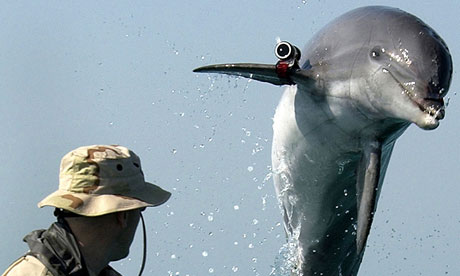
The US Navy has trained dolphins to detect mines. Now, they might be used in the conflict with Iran over its nuclear policies.

In response to heightened sanctions, Iran has threatened to block the Strait of Hormuz, the only sea route out of the Persian Gulf and, according to the US energy department, "the world's most important oil choke". Iran might use mines to do it, and if they should do so, then, according to retired US Admiral Tim Keating, who previously commanded the US 5th Fleet in Bahrain, "we've got dolphins."

According to earlier reports, the US Navy has trained about 80 dolphins to detect mines. Some reports say that the dolphins only locate the mines and drop acoustic transponders nearby, so that humans can destroy the mines, but it is also possible for the dolphins to set off the mines and die in the resulting explosion, and, of course, using the dolphins in this way makes them – and any other dolphins in the area – targets for the Iranians to destroy if they can.

Animals, or at least those who are conscious and capable of suffering or enjoying their lives, are not things for us to use in whatever way we find convenient. To believe that, because they are members of a different species, we can ignore or discount their interests is speciesism, a form of prejudice against beings who are not "us" that is akin to racism and sexism. We should give equal consideration to the interests of any sentient being, where their interests are similar to our own.

Dolphins are social mammals, capable of enjoying their lives. They form close bonds with other members of their group. They respond to images of themselves in a mirror, and use the mirror to examine marks on parts of their body that they cannot otherwise see – a test that is widely taken to be a sign of self-awareness, which human children cannot pass until they are somewhere between 18 months and two years of age.

The United States no longer conscripts its citizens to fight its wars. All its human troops are volunteers. But even conscripts have some basic rights. The dolphins have none.

Late last year, People for the Ethical Treatment of Animals, together with three international orca experts, and two former orca trainers asked a federal court in San Diego to declare that five orcas held and forced to perform by SeaWorld are held as slaves in violation of the 13th Amendment to the US Constitution that outlaws slavery. The suit has yet to be heard, but a similar case might be made against the US Navy for its use of dolphins.

Various civilizations have, at times, enslaved human beings and forced them to fight for their oppressors. That despicable practice is now rightly condemned, as far as human beings are concerned, but the enslavement of other species continues, in many areas of human life, and the use of slaves in war continues in the United States Navy.

It might be argued that as long as billions of animals are confined in factory farms to produce meat, eggs and milk, the use of a few dolphins in military action is trivial. Obviously, the amount of suffering we inflict on factory-farmed animals every day dwarfs whatever might happen to the dolphins.

Nevertheless, just when we are starting to realize how gravely we are wronging animals, and to do something about this – like the very welcome European Union ban on standard battery cages for laying hens, which came into effect on 1 January this year – we ought not to be finding new ways to exploit them.

Dolphins have nothing to do with the dispute over Iran's nuclear plans. Whatever the rights and wrongs of taking military action against Iran, let's leave the dolphins out of it.

Read more…

Read more about Military Testing: The Unseen War

guardian.co.uk © 2012 Guardian News and Media Limited or its affiliated companies. All rights reserved. | Use of this content is subject to our Terms & Conditions |

Louie Schwartzberg: The hidden beauty of pollination

Friday, 6 January 2012

Sorgloser Umgand mit Gentechnologie und Pestizide bei Monsanto


This film shows how carefree genetic engineering and pesticides are used in our agriculture and highlights also the backgrounds. (in German)